

Ort: Slavic Seminar, Nadelberg 8, 4051 Basel
"Where Silence Speaks. (In)audibility as a cultural phenomenon and scholarly challenge in Eastern and South-Eastern Europe"
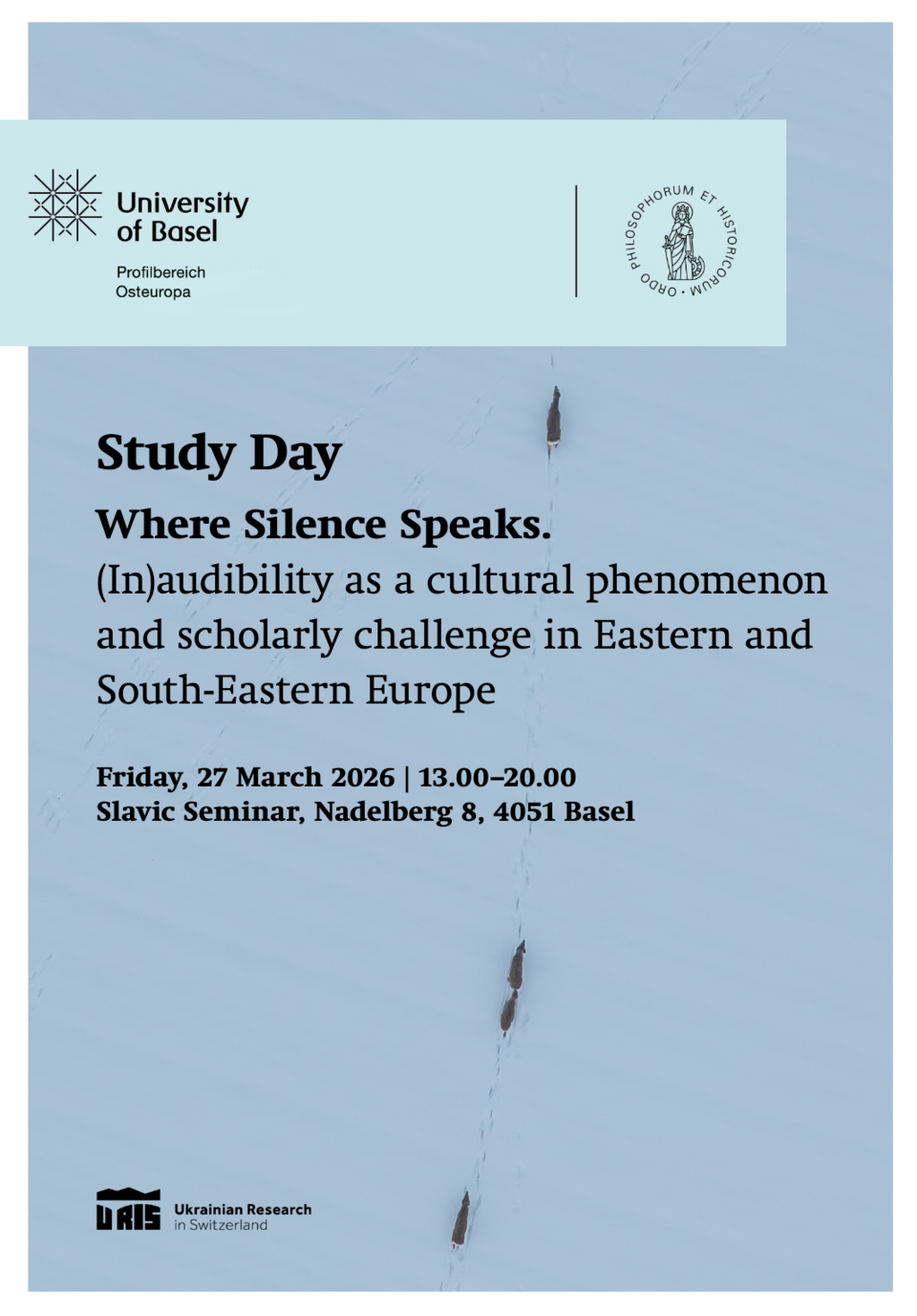
The question “Who speaks?” has been prominent in humanities research for several decades: Addressing the positionalities of speaking subjects and their embeddedness into cultural hierarchies has strongly contributed to discussions of, among others, gender, (post-)coloniality and sexualities in studies of both histories and cultures in Eastern and South-Eastern Europe. This study day is set to address this question’s implicitly omnipresent counterpart: Who doesn’t speak and why?
In a series of workshops, we address the production, perpetuation and the challenging of silences in historical constellations and cultural production in Eastern Europe. By which mechanisms have certain groups (women, LGBTQ+, indigenous groups) or forms of cultural and artistic activity been excluded from the production of knowledge and denied entry into the so-called canon? How do members of marginalized groups challenge hegemonic discourses that deny them the capacity to speak? And how can researchers and students engage ethically with such silences and the individuals behind them, especially in times of war? The workshops within this event tackle these questions drawing on case studies from Ukraine, Poland, Russia and Bosnia’s Roma population.
You can sign up via the online form (deadline: 13 March 2026) and select your preferred working groups.
Further information, including details on the program and working groups, can be found on the event flyer.
Veranstaltung übernehmen als iCal
Quick Links